



Trk Receptor
Tropomyosin related kinase receptor
Trk receptors are a family of three receptor tyrosine kinases (TrkA, TrkB, and TrkC), each of which can be activated by one or more of four neurotrophins-nerve growth factor (NGF), brain-derived neurotrophic factor (BDNF), and neurotrophins 3 and 4 (NT3 and NT4).
TrkA, TrkB, and TrkC are transmembrane proteins that comprise the TRK receptor family. These receptor tyrosine kinases are expressed in human neuronal tissue, and play an essential role in both the physiology of development and function of the nervous system through activation by neurotrophins (NTs). The latter are specific ligands known as NGF for TrkA, BDGF, and NT-4/5 for TrkB and NT3 for TrkC, respectively.
The binding of the ligand to the receptor triggers the oligomerisation of the receptors and phosphorylation of specific tyrosine residues in the intracytoplasmic kinase domain. This event results into the activation of signal transduction pathways leading to proliferation, differentiation and survival in normal and neoplastic neuronal cells.
Trk Receptor Isoform Specific Products
All Product Categories
-
Trk Receptor Inhibitors
(148)
View all products
-
Trk Receptor Agonists
(13)
View all products
-
Trk Receptor Antagonists
(4)
View all products
-
Trk Receptor Activators
(24)
View all products
-
Trk Receptor Modulators
(4)
View all products
-
Trk Receptor Degraders
(5)
View all products
-
Trk Receptor Controls
(4)
View all products
-
Trk Receptor Ligands
(2)
View all products
-
Trk Receptor Related Products (220)
Related Products (220)

-
Antibodies (9)
-
Trk Receptor Isoform Comparison
-
NPA101.3
 0 ImagesCat. No.: HY-183931CAS No.: 1839155-15-5NPA101.3 is an orally active RET receptor tyrosine kinase and VEGFR2 inhibitor (RET IC50 = 0.001 μM, RETV804M IC50 = 0.008 μM, VEGFR2 IC50 = 0.003 μM). NPA101.3 inhibits purified TRKA (IC50 = 32 nM) and CSF1R (IC50 = 46 nM). NPA101.3 completely suppresses tumor formation in RET/C634Y-transformed cells and also attenuates tumor formation in HRAS/G12V-transformed cells. NPA101.3 can be used in the research of RET-driven cancers.
-
CRB-0089
 0 ImagesCat. No.: HY-P991325CRB-0089 is a human monoclonal antibody (mAb) targeting NGF/bNGF. CRB-0089 can be used in analgesia research.
-
Antitumor agent-223
 0 ImagesCat. No.: HY-184729CAS No.: 3124621-78-6Antitumor agent-223 is an anticancer agent and TRK inhibitor. Antitumor agent-223 exerts potent antitumor activity against liver cancer and breast cancer. Antitumor agent-223 can be used for the research of hepatocellular carcinoma and breast cancer.
-
TrkC-IN-1
 0 ImagesCat. No.: HY-173227CAS No.: 1877313-32-0TrkC-IN-1 (Compound 6c) is an inhibitor of TrkC. The IC50 values for EBC-1 and HT-29 cells are 3.3-7.1 and 7.3-10.2 μΜ, respectively. TrkC-IN-1 is expected to be used in the research of the anti-cancer field.
-
NTRK1-ligand-1
 0 ImagesCat. No.: HY-185545CAS No.: 2922277-92-5
-
TRK-IN-18
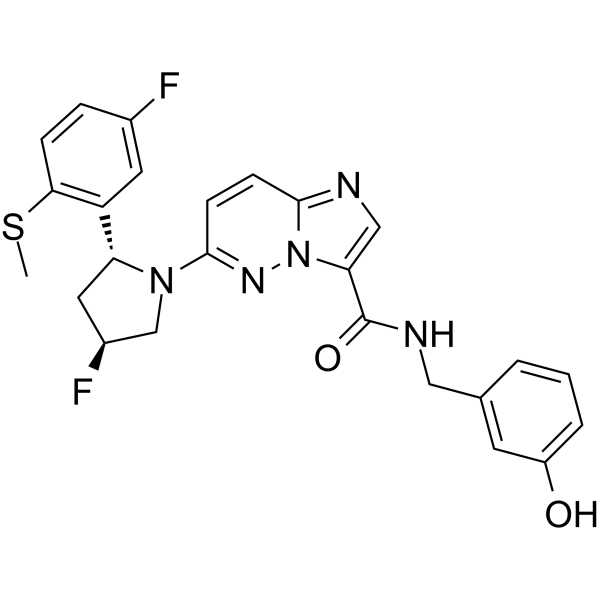 0 ImagesCat. No.: HY-146524CAS No.: 2412008-91-2TRK-IN-18 is a potent inhibitor of TRK. Tropomyosin-related kinases (Trks) are a family of receptor tyrosine kinases activated by neurotrophins, a group of soluble growth factors including Nerve Growth Factor (NGF), Brain-Derived Neurotrophic Factor (BDNF) and Neurotrophin-3 (NT-3) and Neurotrophin-4/5 (NT-4/5). TRK-IN-18 has the potential for the research of cancer diseases (extracted from patent WO2021148805A1, compound 7).
-
PC-046
 0 ImagesCat. No.: HY-120561CAS No.: 1202401-59-9PC-046 is a multi-target inhibitor for tyrosine receptor kinase B (TrkB), IRAK-4 and Pim-1, with IC50 of 13.4 μM, 15.4 μM and 19.1 μM, respectively. PC-046 exhibits cytotoxicity against pancreatic cancer cell BxPC3 with IC50 of 7.5-130 nM. PC-046 induces apoptosis and arrests cell cycle at G2/M phase in BxPC3. PC-046 exhibits antitumor efficacy and exhibits good pharmacokinetic characteristics in mice.
-
Type II TRK inhibitor 1
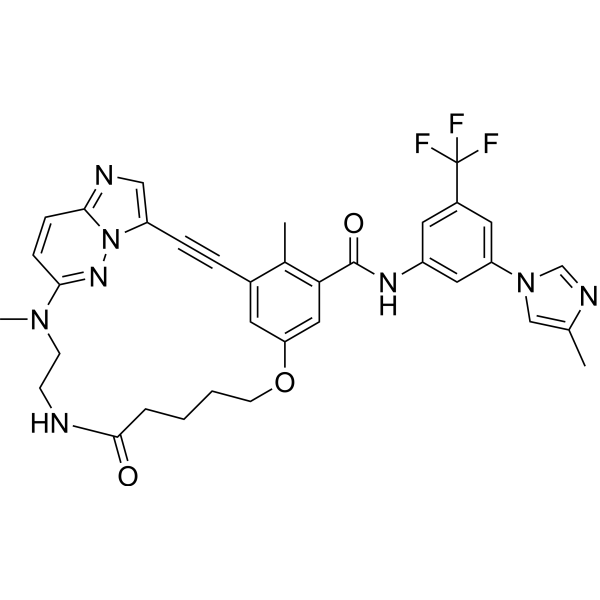 0 ImagesCat. No.: HY-146807CAS No.: 2937543-72-9Type II TRK inhibitor 1 is a potent TRK inhibitor, which inhibits various TRK fusion protein variants and wild type. Type II TRK inhibitor 1 exhibits antiproliferative activity against Ba/F3 cells harboring CD74-TRKAG667C and ETV6-TRKCG696C fusion proteins with IC50s of 6 nM and 1.7 nM, respectively. Type II TRK inhibitor 1 is a click chemistry reagent, it contains an Alkyne group and can undergo copper-catalyzed azide-alkyne cycloaddition (CuAAc) with molecules containing Azide groups.
-
D5261
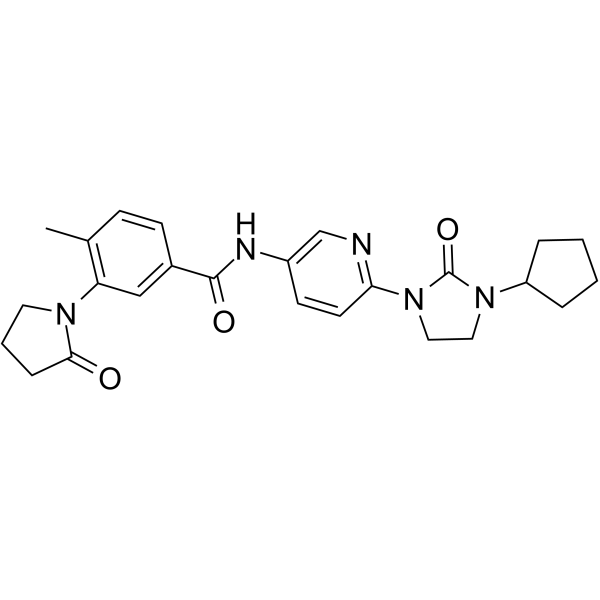 0 ImagesCat. No.: HY-144690CAS No.: 1574574-57-4D5261 is a potent, type III allosteric tropomyosin-related kinase A (TrkA) inhibitor.
-
IHMT-TRK-284
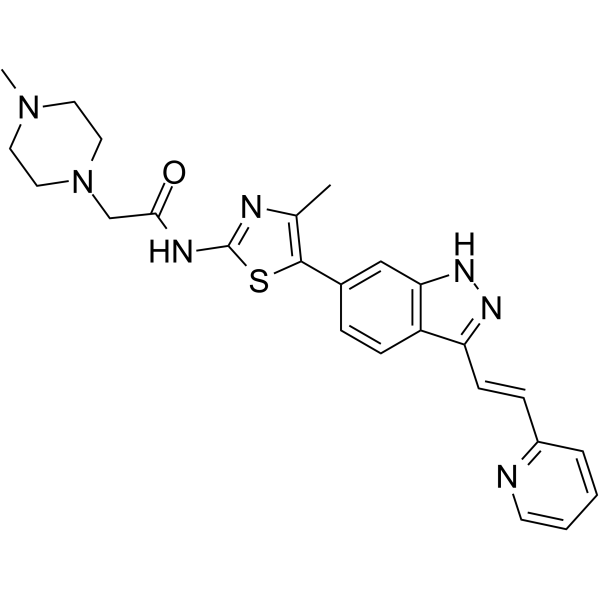 0 ImagesCat. No.: HY-146697CAS No.: 2416844-79-4
-
TRK-IN-33
 0 ImagesCat. No.: HY-180172TRK-IN-33 is a TRK inhibitor. TRK-IN-33 exhibits excellent TRKAG667C degradation (DC50 = 24.69 nM; Dmax > 90%), while sparing the wild-type protein in virto. TRK-IN-33 shows antiproliferative activities against Ba/F3-LMNA-NTRK1G667C cells with an IC50 value of 2.48 nM. TRK-IN-33 effectively inhibits tumor growth and enhances apoptosis in tumor tissues with no apparent toxicity in vivio. TRK-IN-33 can be used for NTRK fusion−positive cancers research.
-
Anizatrectinib
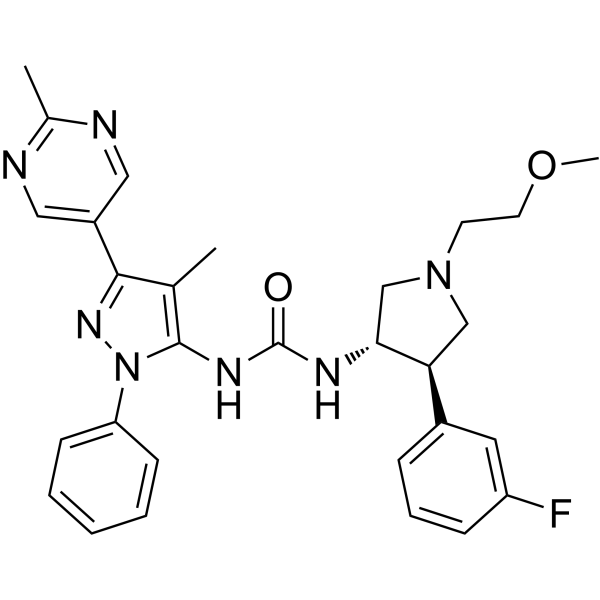 0 ImagesCat. No.: HY-136535CAS No.: 1824664-89-2Synonyms: hTrkA-IN-1Anizatrectinib (hTrkA-IN-1) is a potent and orally active inhibitor of TrkA kinase with an IC50 of 1.3 nM, compound 2 extracted from patent WO2015175788. Anizatrectinib can be used for the study of inflammatory disease, such as prostatitis, pelvic, et al.
-
NMS-P626
 0 ImagesCat. No.: HY-164514CAS No.: 942471-37-6NMS-P626 is an inhibitor of TRKA, TRKB, and TRKC, with IC50 values of 8 nM, 7 nM, and 3 nM, respectively. NMS-P626 inhibits the growth of KM12 cells by suppressing the phosphorylation of TPM3-TRKA and downstream signaling in KM12 cells, with an IC50 of 19 nM for KM12 cells. NMS-P626 can be used in colorectal cancer research.
-
2-Bromo-6-methoxynaphthalene (Standard)
 0 Images2-Bromo-6-methoxynaphthalene (Standard) is the analytical standard of 2-Bromo-6-methoxynaphthalene. This product is intended for research and analytical applications. 2-Bromo-6-methoxynaphthalene is an active intermediate in the production of anti-inflammatory agents like Naproxen and Nabumetone by Heck reaction. 2-Bromo-6-methoxynaphthalene has potential anti-inflammatory properties and Tyrosine-protein inhibitor properties. 2-Bromo-6-methoxynaphthalene can be used for the research of cancer.
-
Longanlactone
 0 ImagesCat. No.: HY-124503CAS No.: 1438721-51-7Longanlactone is a natural pyrrole-lactone alkaloid that can be used as a neurotrophic agent. Longanlactone increases BDNF gene expression in neuro2a cells.
-
Utatrectinib (Standard)
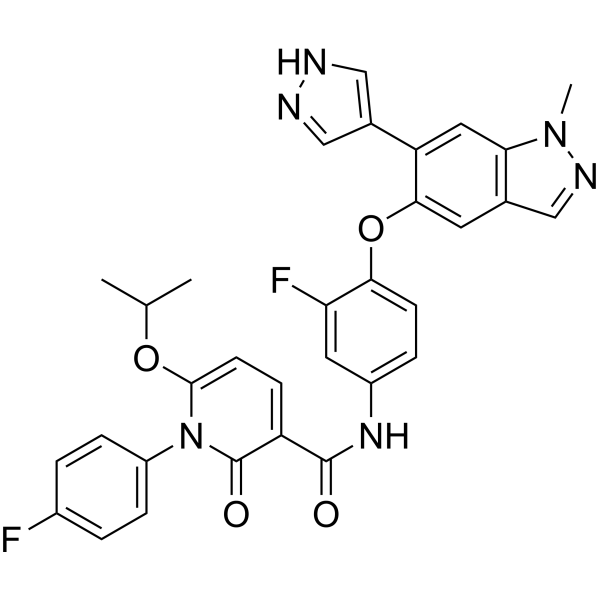
 0 ImagesCat. No.: HY-102066RCAS No.: 1079274-94-4Synonyms: AZD-7451 (Standard)Utatrectinib (Standard) is the analytical standard of Utatrectinib (HY-102066). This product is intended for research and analytical applications. Utatrectinib (AZD-7451) is a potent, selective and orally active Trk inhibitor. Utatrectinib blocks TrkC activation and associated tumorigenic behaviors.
-
PD 90780 (Standard)
 0 ImagesCat. No.: HY-110166RCAS No.: 77422-99-2PD 90780 (Standard) is the analytical standard of PD 90780 (HY-110166). This product is intended for research and analytical applications. PD 90780 is a non peptide antagonist of nerve growth factor (NGF). PD 90780 interacts with NGF, prevents NGF binds with p75NTR. PD 90780 inhibits NGF-p75NTR interaction with IC50s of 23.1 and 1.8 μM in PC12 cells and PC12nnr5 cells, respectively .
-
Xaliproden free base
 0 ImagesCat. No.: HY-119820CAS No.: 135354-02-8Synonyms: SR57746A free baseXaliproden (SR57746) free base is an orally active, highly selective 5-HT1A receptor agonist. Xaliproden free base activates pertussis toxin-sensitive G protein-coupled signaling cascades, as well as the PKC, ERK1/ERK2, Akt and p21 Ras/MEK-1 pathways. Xaliproden free base also downregulates the JNK/p66/c-Jun signaling pathway, induces phosphorylation of the shc adaptor protein, regulates extracellular dopamine and 5-HT levels, and induces [35S]GTPγS labeling in rat brain structures rich in 5-HT1A receptors. Xaliproden free base exerts neurotrophic, neuroprotective, renoprotective, anti-inflammatory, anti-apoptotic, anti-fibrotic and analgesic effects. Xaliproden free base also enhances NGF-induced neurite outgrowth, promotes motor neuron survival, attenuates renal tubular injury and inhibits chemotherapy-induced mechanical allodynia, without activating or altering NGF-induced TrkA receptor activation. Xaliproden free base can be used in the research of motor neuron disease, diabetic nephropathy, chemotherapy-induced peripheral neuropathy, amyotrophic lateral sclerosis, Alzheimer's disease, acute tonic nociceptive pain, inflammatory pain, depression and anxiety.
-
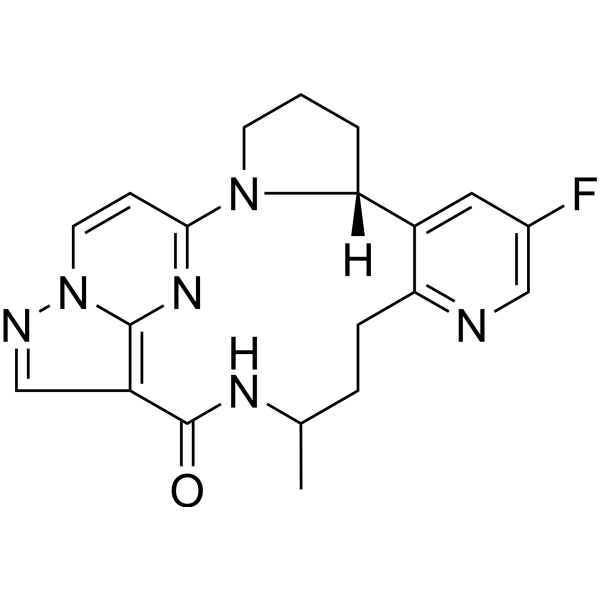
(3aR)-Selitrectinib
 0 ImagesCat. No.: HY-101977BCAS No.: 1350884-56-8Synonyms: (3aR)-LOXO-195(3aR)-Selitrectinib ((3aR)-LOXO-195) is an isform of Selitrectinib (HY-101977), which is a next-generation TRK kinase inhibitor, with IC50s of 0.6 nM and <2.5 nM for TRKA and TRKC, respectively.




